
Identity
Full name, date of birth, address, preferred language, and only the identifiers that are genuinely needed for care.
Keep one concise, current record that a trusted family member can find quickly. The goal is not to collect everything—it is to make the most important information available, with the older person’s consent, when time and clarity matter.
Full name, date of birth, address, preferred language, and only the identifiers that are genuinely needed for care.
Primary family contact, nearby trusted person, backup contact, treating clinician, and preferred hospital or clinic.
The current clinician-confirmed medicine list, doses as prescribed, allergies, adverse reactions, and the date last checked.
Conditions, implants or devices, mobility or communication needs, and other facts a qualified responder should know.
Health-insurance or scheme details and where important documents can be found. Avoid exposing full identifiers unnecessarily.
Who may access the record, where it is available, who maintains it, and the next review date.
A family-created summary may be incomplete or outdated. Treat it as a coordination aid and verify critical information with the older person, clinician, pharmacist, or authoritative record whenever possible.
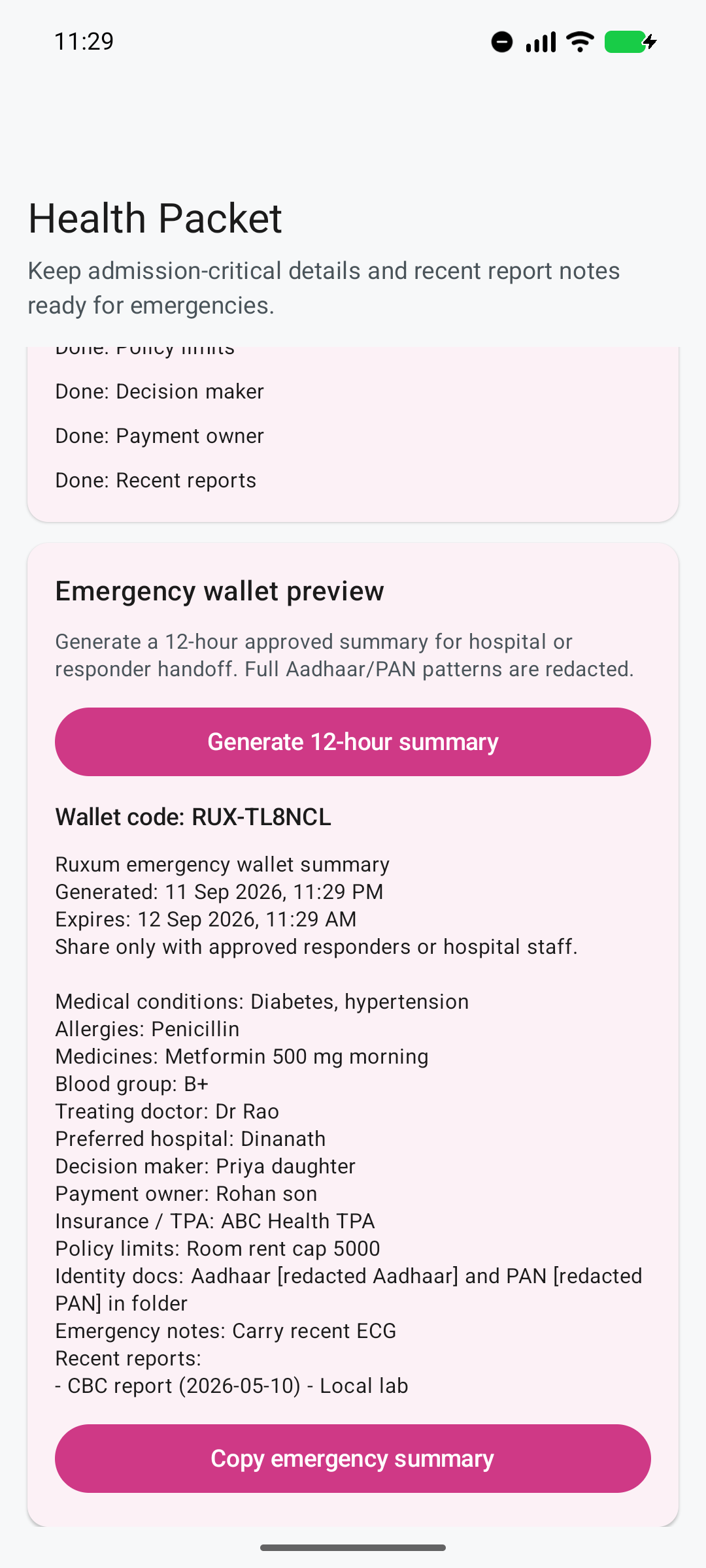
Ruxum includes a Health Packet for family-prepared information and shows when it was last updated.
India’s official Emergency Response Support System uses the single number 112 for emergency assistance from police, fire and rescue, health, and other services. If there is an immediate threat to life or safety, call 112; do not wait for an app status or message.
Official Emergency Response Support System (112.gov.in)
The Government of India’s Social Justice department also publishes a Saving Life Checklist for older people. Ruxum’s checklist is a shorter family-coordination guide and does not replace official instructions or professional advice.
Prepare identity, primary and backup contacts, current medicines and allergies, relevant conditions, clinicians, preferred hospital, insurance information, essential document location, consent choices, and a review date.
No. Keep the urgent summary concise and current. Share full records only when needed and with appropriate consent and safeguards.
No. Ruxum does not provide continuous monitoring or emergency dispatch. In India, call 112 for an immediate threat to life or safety.
Review it with the older person and a qualified clinician or pharmacist where appropriate.