
1. Consent and preferences
Ask what support is welcome, what feels intrusive, who may see information, and which decisions the older person wants to keep entirely their own.
Use this checklist to agree on contacts, routines, responsibility, emergency information, and respectful check-ins. Start with the older person’s choices, then make the family’s follow-through visible.
Ask what support is welcome, what feels intrusive, who may see information, and which decisions the older person wants to keep entirely their own.
Write down the primary family contact, a nearby trusted person, a backup, building or community contacts, clinicians, and the preferred hospital.
Agree on a small number of meaningful check-ins or visits. Give each one an owner, time window, backup, and clear action if it is missed.
Keep the current prescribed medicine list and appointment plan together. Decide who records outcomes and who follows up; do not change treatment without a clinician or pharmacist.
Prepare identity, emergency contacts, medicines, allergies, clinician and hospital details, insurance information, and the location of important documents.
Know who can physically reach the home, how they can enter with permission, and when the family should call 112 or another appropriate local service.
A recorded completion is not independent proof that a person arrived, care was delivered correctly, or the older person is safe. Follow up directly whenever something feels wrong.
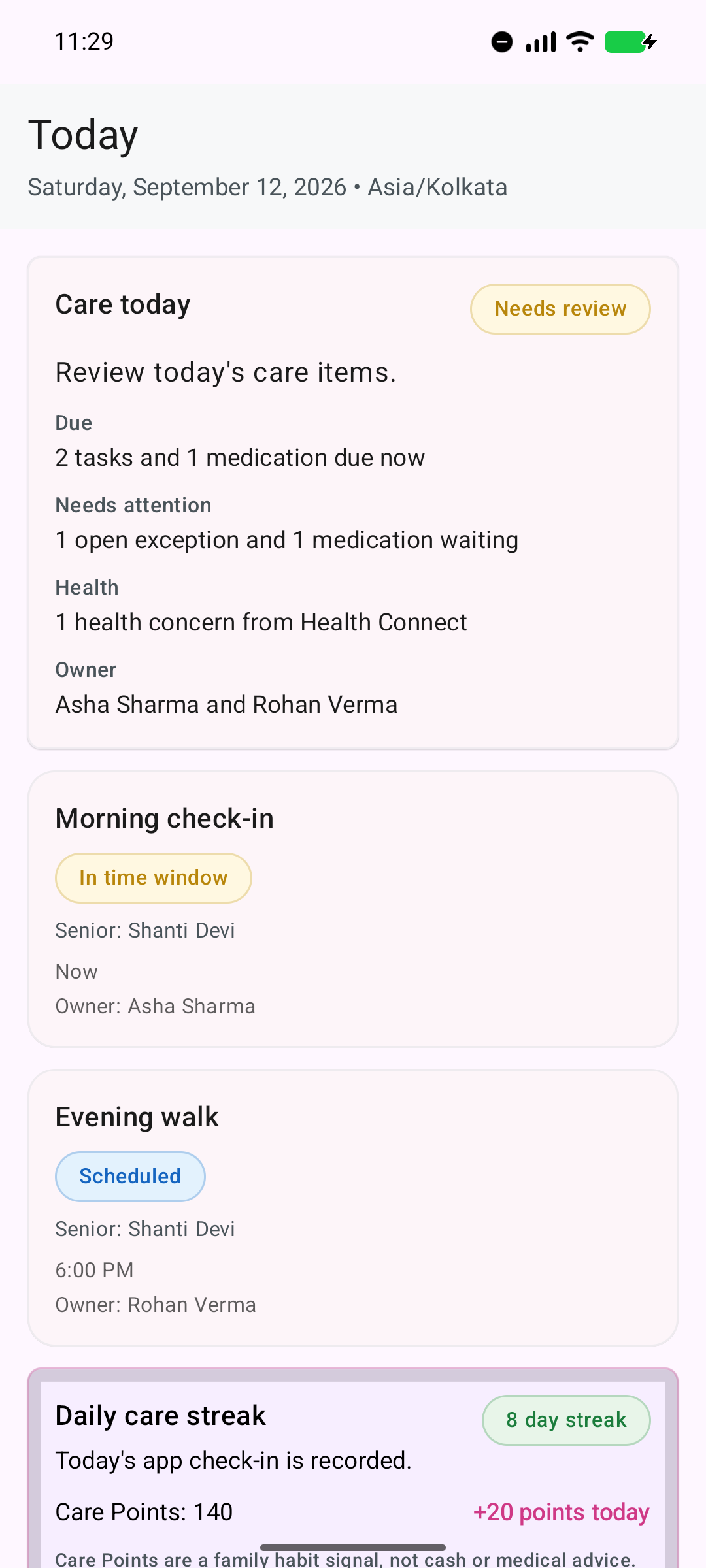
Ruxum can put routines, medicine follow-through, exceptions, and owners in a shared family view.
A scheduled call or visit may be more useful than passive data. Technology should support, not replace, the relationship.
Location, phone, activity, and connected-device signals can be delayed, stale, incomplete, unavailable, or misunderstood.
Explain what is collected and who sees it. Revisit the choice when circumstances, permissions, devices, or family roles change.
Give recurring work a time, owner, status, and exception path.
Define roles for relatives and trusted local people.
Prepare a concise record before it is needed.
Start with consent, reliable contacts, a daily communication rhythm, clear ownership for medicines and appointments, emergency information, and a local response path.
No. It is a coordination aid. It does not assess health, provide continuous monitoring, guarantee a response, or replace professional or emergency services.
No. Discuss each signal with the older person, collect only what is useful, explain who can see it, and make consent and dignity part of the plan.
Review it with the older person and the nearby people who would actually respond.