
Name the task
Describe one bounded responsibility: morning check-in, transport, groceries, appointment follow-up, or another household-defined action.
A good handoff says exactly what is needed, who owns it, when it is expected, what context is safe to share, and what to do if the plan changes.
Describe one bounded responsibility: morning check-in, transport, groceries, appointment follow-up, or another household-defined action.
Name the primary owner, time window, Senior-home timezone, and backup person.
Provide only the notes and approved access needed for this task. Keep health and identity information private.
Record a simple outcome: complete, missed, rescheduled, or needs review—with a short factual note when useful.
Contact family, a qualified professional, or 112 when the situation falls outside the task or presents an immediate danger.
Do not put passwords, bank details, Aadhaar numbers, full medical records, or unnecessary personal data in a routine task note.
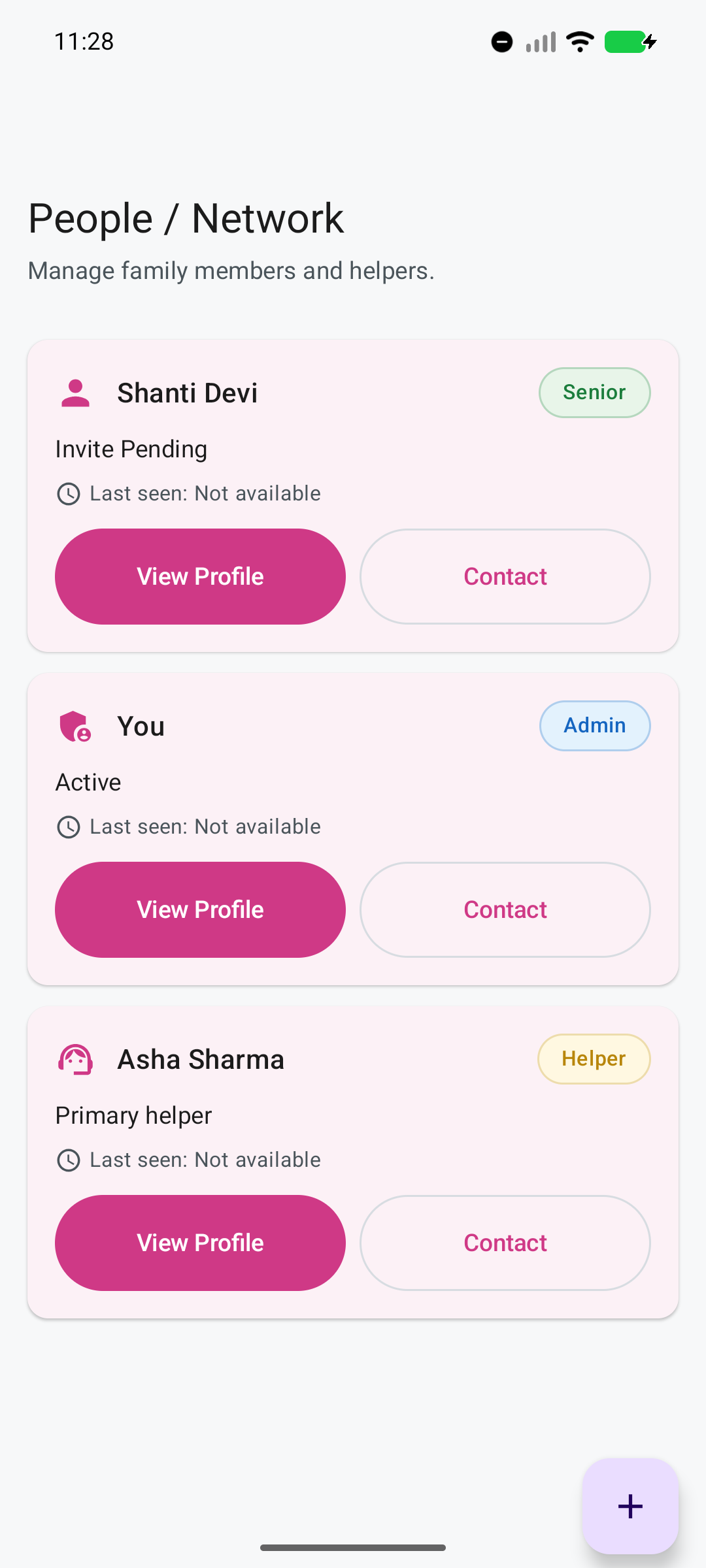
Ruxum separates family administration, local helpers, and the Senior’s view so each person can see the work relevant to their role.
Use the prescribed list and approved instructions. A helper should not add, stop, substitute, or change a dose unless directed by a qualified clinician or pharmacist.
The family must choose and verify its helpers and decide what home or information access is appropriate.
A completed status is a report, not independent proof of identity, arrival, quality, or safety.
Include one clear task, the owner, time window, necessary notes, access instructions, completion signal, backup, and escalation path.
Not on the basis of this checklist. Medicine or treatment changes must come from the older person’s qualified clinician or pharmacist.
No. Families choose and remain responsible for the people they add. Ruxum does not recruit, vet, employ, certify, insure, supervise, or pay helpers.
Start with one repeated handoff, then improve the family’s process from real use.